
Wildlife in Serengeti National Park
July 16, 2026
Wildlife in Tarangire National Park
July 17, 2026
Wildlife in Ngorongoro Conservation Area
Ngorongoro Conservation Area is one of Tanzania’s most outstanding wildlife destinations. It is home to an incredible variety of animal species that thrive within its diverse landscapes. Located in northern Tanzania, the conservation area is famous for the Ngorongoro Crater, the world’s largest intact volcanic caldera. This natural wonder creates a unique environment that supports thousands of wild animals throughout the year. The abundance of wildlife, combined with breathtaking scenery, makes Ngorongoro one of Africa’s finest safari destinations.
The conservation area covers approximately 8,292 square kilometers and includes grasslands, forests, swamps, rivers, lakes, acacia woodlands, and volcanic highlands. Each habitat supports different wildlife species, allowing visitors to enjoy exceptional game viewing during every safari. Unlike many wildlife destinations where animals migrate over long distances, the Ngorongoro Crater provides permanent water and abundant grazing. As a result, many animals remain inside the crater throughout the year. This makes wildlife viewing reliable regardless of the season.
Ngorongoro Conservation Area forms part of the greater Serengeti ecosystem and plays a vital role in wildlife conservation. It provides safe habitats for endangered species while supporting healthy populations of herbivores, predators, birds, reptiles, and smaller mammals. Conservation programs continue to protect these ecosystems through research, anti-poaching efforts, habitat management, and community involvement.
Visitors travel from around the world to witness the remarkable wildlife found within the conservation area. Game drives offer opportunities to observe animals at close range while experienced guides explain their behavior and ecology. Every safari provides exciting encounters with some of Africa’s most iconic species. Whether visiting for a single day or several days, travelers experience one of the richest wildlife destinations on the continent.
The Big Five in Ngorongoro Conservation Area
Ngorongoro Conservation Area is one of the few places in Africa where visitors have an excellent chance of seeing the famous Big Five during a single safari. These iconic animals include the African lion, African elephant, African leopard, Cape buffalo, and black rhinoceros. Their presence makes the conservation area one of Tanzania’s most rewarding wildlife destinations.
African lions are among the most commonly seen predators in the Ngorongoro Crater. Several prides occupy different territories across the crater floor. Visitors often observe lions resting in the grass after a hunt, watching over their cubs, or searching for prey during the cooler hours of the day. Their healthy population reflects the abundance of herbivores that support the food chain within the crater.
African elephants also thrive in the conservation area. Mature bull elephants are especially common in the forests surrounding the crater rim and on the crater floor. These impressive animals feed on grasses, leaves, and tree bark while moving peacefully through their habitat. Their large tusks make them among the most photographed wildlife species in Ngorongoro.
Leopards are more elusive than lions but occasionally appear in forested areas and acacia woodlands. Their secretive behavior makes every sighting memorable. Cape buffaloes gather in large herds throughout the crater where they graze on rich grasslands. The endangered black rhinoceros remains one of Ngorongoro’s greatest conservation successes. Although only a small population survives, visitors have one of the best opportunities in Tanzania to observe these rare animals in the wild.
Lions and Other Predators
Predators play a vital role in maintaining the ecological balance of Ngorongoro Conservation Area. Lions dominate the food chain and regularly hunt wildebeests, zebras, buffaloes, and gazelles. Their cooperative hunting strategies make them fascinating to observe during game drives. Visitors may witness lions stalking prey across open grasslands or resting beneath acacia trees after a successful hunt.
Spotted hyenas are another important predator found throughout the conservation area. Despite their reputation as scavengers, hyenas are highly skilled hunters that often capture their own prey. Large clans compete with lions over carcasses, creating dramatic wildlife interactions that showcase the complex relationships within the ecosystem.
Leopards remain among the most difficult predators to spot because they spend much of their time hidden in dense vegetation or resting high in tree branches. They usually hunt alone during the evening and early morning hours. Servals, jackals, bat-eared foxes, and wild cats also inhabit different parts of the conservation area. These smaller carnivores hunt rodents, birds, reptiles, and insects, contributing to the area’s healthy ecological balance.
Herbivores of Ngorongoro Conservation Area
The rich grasslands and permanent water sources support a remarkable variety of herbivores. Wildebeests, zebras, Cape buffaloes, Thomson’s gazelles, Grant’s gazelles, elands, hartebeests, waterbucks, reedbucks, bushbucks, warthogs, and hippos are commonly seen throughout the conservation area. Their abundance provides a stable food supply for the region’s predators.
Wildebeests and zebras frequently graze together across the crater floor. This partnership benefits both species because zebras eat the taller grasses while wildebeests feed on the shorter shoots left behind. Gazelles browse nearby, taking advantage of fresh vegetation and remaining alert for predators.
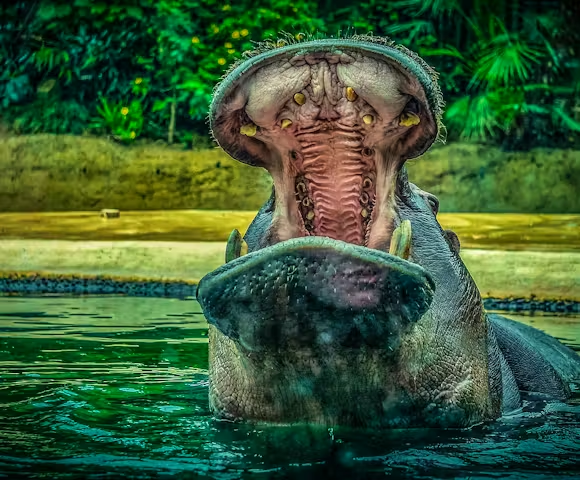
Hippos spend much of the day cooling themselves in pools and marshes before emerging in the evening to graze. Buffaloes gather in large herds and move between grasslands and water sources. These herbivores shape the landscape through their grazing habits while supporting the entire wildlife ecosystem.
Birdlife in Ngorongoro Conservation Area
Ngorongoro Conservation Area is also one of Tanzania’s leading bird-watching destinations. More than 500 bird species have been recorded, making it a paradise for bird enthusiasts. The area’s varied habitats attract both resident and migratory birds throughout the year.
Lake Magadi, located on the crater floor, often hosts large flocks of greater and lesser flamingos that feed on algae in the shallow waters. Ostriches roam the open plains, while crowned cranes, secretary birds, kori bustards, hornbills, storks, herons, pelicans, kingfishers, and eagles appear in different habitats across the conservation area.
Bird watchers can also observe colorful bee-eaters, sunbirds, weavers, barbets, and turacos in forested regions near the crater rim. The wide variety of bird species makes every safari rewarding, even for visitors primarily interested in mammals. Combining exceptional birdlife with abundant wildlife creates a complete safari experience that appeals to nature lovers from around the world.