River Semuliki Hippos- Africa’s Most Aggressive River Giants
April 28, 2026
Bwindi Lens Limit: Why Rangers Insist on 70-200mm for Gorilla Portraits
April 28, 2026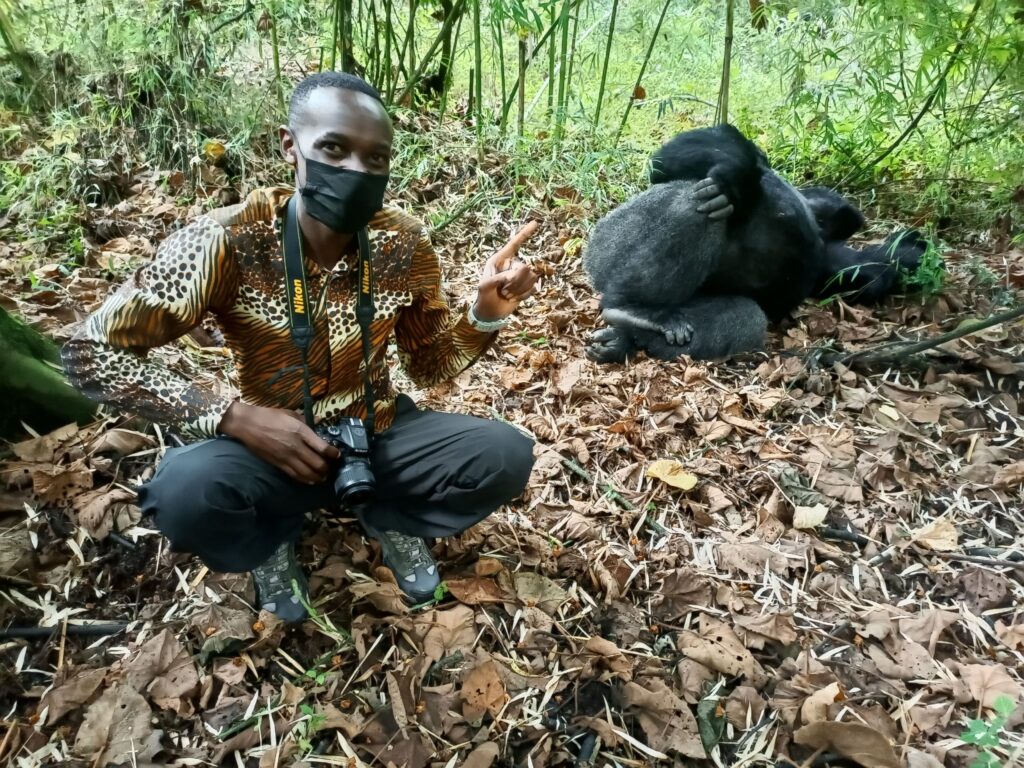
Ranger Photobombs: The UWA Rule That Places a Guard in Every Gorilla Shot
Gorilla trekking in Uganda is one of Africa’s most unforgettable wildlife experiences. Travelers from around the world visit Bwindi Impenetrable National Park and Mgahinga Gorilla National Park to spend time near endangered mountain gorillas. Many visitors come with cameras ready, hoping to capture the perfect portrait of a silverback, a playful juvenile, or a mother with her infant. Yet after reviewing their images, some tourists notice something unexpected. A ranger or armed guard appears in many of their photographs. This has led to the popular phrase “Ranger Photobombs.”
While some visitors may first see it as an inconvenience, the truth is very different. This is not an accident, and it is not careless positioning. It comes from a deliberate rule and operational practice by the Uganda Wildlife Authority (UWA). The presence of a ranger in or near gorilla photographs reflects safety, conservation discipline, and professional management of one of the world’s most sensitive wildlife tourism activities.
Mountain gorillas live in dense forests where conditions can change quickly. They are powerful wild animals, even when habituated to human presence. Trekkers move through steep terrain, thick vegetation, slippery slopes, and narrow clearings. Rangers must stay alert every second. Their job includes protecting tourists, guiding movement, reading gorilla behavior, enforcing viewing rules, and responding to any risk immediately. Because of this, they often stand within the same frame as the gorillas.
The so-called ranger photobomb is therefore a symbol of protection, not disruption. It shows the high level of care behind Uganda’s gorilla tourism industry. Every successful trek depends on trained rangers who work quietly in the background. Their presence in photographs tells a deeper story about safety, conservation, and the serious effort required to protect mountain gorillas for future generations.
Why UWA Places Guards Near Every Gorilla Encounter
Uganda Wildlife Authority manages gorilla trekking under strict rules. These rules exist because mountain gorillas remain endangered and highly valuable to global conservation. UWA must protect both the animals and the visitors who come to see them. One important practice involves keeping armed rangers or guards close during each gorilla encounter.
Many people assume habituated gorillas are tame animals. That is not correct. Habituation means gorillas have become used to respectful human presence. It does not remove their natural instincts. A silverback can react if he feels threatened. Juveniles can move unpredictably. Mothers protect infants strongly. Rangers study these behaviors and position themselves carefully to manage space between gorillas and tourists.
The forests of Bwindi and Mgahinga also contain difficult terrain. Thick vegetation can limit visibility. A tourist focused on taking photos may step backward into roots, holes, or steep ground. Rangers watch both the gorillas and the group. They often stand close enough to guide movement immediately.
Security is another reason for the rule. Gorilla permits carry high value and attract international tourism. Rangers help secure trekking areas and maintain control of visitor groups. Their visible presence supports order and discipline during the activity.
Because photographers naturally aim at the gorillas, any ranger standing in the safety zone can appear in the frame. This happens often, especially in tight forest spaces where there is little room to move. What some call a photobomb is actually the result of precise field positioning. Rangers do not enter shots to spoil pictures. They stand where they need to stand to keep the encounter safe and controlled.
The Safety Role of Rangers During Gorilla Photography
Photography can distract visitors. Many trekkers become so focused on getting the perfect image that they stop noticing their surroundings. They may step too close, crouch in the wrong place, block another guest, or miss warning signs from the gorillas. Rangers reduce these risks by staying within immediate reach of the group.
When a gorilla moves unexpectedly, the ranger reacts first. If a silverback approaches, the ranger may instruct guests to remain calm, lower themselves, or avoid direct eye contact. If juveniles run through the group, the ranger helps manage space without panic. These actions happen in seconds. That is why rangers must remain close enough to intervene fast.
During photography sessions, visitors often spread out for better angles. Some kneel low, others move sideways, and some stand behind vegetation. Without supervision, this movement could surround the gorillas or create stress. Rangers reposition guests to maintain respectful viewing lines.
This safety role explains why rangers frequently appear at the edge of images. They may stand behind a gorilla, beside a tree, or near the trekking group. In dense forest, even a small shift in angle can place them directly in the frame.
Visitors sometimes realize later that their best photographs include a ranger watching quietly in the background. Rather than seeing this as a flaw, many come to value it. The ranger represents the unseen work that made the moment possible. Without trained protection teams, close gorilla encounters would not happen in a safe or sustainable way.
Conservation Comes Before Perfect Photos
Uganda does not run gorilla trekking as a photo studio. It runs it as a conservation model that funds wildlife protection, research, community benefits, and forest management. This means gorilla welfare always comes before photography preferences.
Rangers enforce distance rules, time limits, health protocols, and group behavior standards. If a ranger steps into a frame while guiding a tourist back or monitoring a gorilla’s movement, conservation priorities have taken precedence. That is exactly how the system should work.
Many visitors arrive hoping for uninterrupted portrait shots. However, gorilla trekking is a real wildlife encounter in a living forest. Rangers cannot disappear just because cameras are present. Their duty is to protect the animals and ensure people follow rules. If they need to stand in view to control the situation, they will do so.
This disciplined approach has helped Uganda become one of the leading gorilla tourism destinations in Africa. Revenue from permits supports patrol teams, habitat protection, veterinary care, and local communities living near protected areas. Responsible tourism depends on strong management, and strong management requires visible ranger presence.
A photograph without a ranger may look cleaner, but a protected gorilla population matters more than a clean frame. UWA understands this balance. Their policies place conservation first while still allowing guests remarkable photo opportunities.
Why Rangers Often Appear in Gorilla Photos in Bwindi and Mgahinga
The environment itself plays a major role in ranger photobombs. Bwindi Impenetrable National Park is famous for thick rainforest, steep slopes, vines, and tight vegetation tunnels. Mgahinga Gorilla National Park has bamboo zones, volcanic slopes, and dense montane cover. These landscapes create limited shooting positions.
Unlike open safari plains, trekkers cannot always step back for a wider angle. Trees, roots, branches, and slopes block movement. Rangers must use the same small clearings as visitors. As a result, both tourists and guards often share the same narrow visual corridor toward the gorillas.
Light conditions also matter. Photographers naturally seek the brightest angle. Rangers may choose that same angle because it provides better visibility of gorilla behavior and tourist movement. Once both people and cameras align, the chance of a ranger appearing in the image increases.
Gorillas themselves move frequently. A silverback may shift from one bush to another. Juveniles may climb behind a ranger. A mother may sit where the guard already stands nearby. The photographer then captures both subjects together.
This is why ranger photobombs happen so often. It is not poor planning. It is the natural result of wildlife encounters in dense mountain forest conditions where safety teams must remain active and close.
How to Take Better Gorilla Photos While Respecting the Rules
Visitors can still capture excellent gorilla images even with rangers nearby. The key is patience, communication, and smart positioning. Listen carefully during the pre-trek briefing. Rangers often explain where to stand, how to move, and when to wait for a better angle.
Use zoom lenses such as 70-200mm or similar ranges. These help frame the gorilla tightly while excluding background distractions. If a ranger appears near the edge of the shot, a slight zoom adjustment can often solve it.
Wait for natural movement. Gorillas change position often. A few seconds later, the ranger may step aside or the gorilla may turn into a cleaner angle. Patience usually beats rushing.
Shoot from multiple heights if allowed. Kneeling or standing can change perspective enough to remove people from the frame. Always move only when the ranger permits it.
Most importantly, respect the ranger’s instructions even if it interrupts photography. Safety and conservation come first. A missed photo is minor compared to the welfare of endangered gorillas.
Many professional wildlife photographers who visit Uganda understand this. They adapt quickly and still leave with world-class images. The ranger is part of the environment, just like the forest itself.
The Hidden Heroes Behind Every Gorilla Trek
Rangers often receive little credit compared to the gorillas themselves. Yet every successful trek depends on their training, discipline, and courage. They enter the forest early, track gorilla families, assess routes, secure paths, and brief visitors. During encounters, they stay alert while others enjoy the moment.
They work in rain, mud, steep terrain, and thick vegetation. They manage nervous tourists, excited photographers, and unpredictable wildlife behavior. They help injured hikers, answer questions, and maintain calm under pressure.
When a ranger appears in a photograph, the image captures more than a wildlife moment. It captures the human effort behind conservation tourism. That guard represents Uganda’s long-term commitment to protecting mountain gorillas.
Many travelers later say the ranger presence made them feel safer and more relaxed. Knowing professionals stood nearby allowed them to focus on the experience. That confidence improved both enjoyment and photography.
Conclusion
The phrase Ranger Photobombs may sound humorous, but the reality is serious and admirable. The Uganda Wildlife Authority places guards near every gorilla encounter to protect visitors, manage wildlife behavior, and uphold conservation standards. When a ranger appears in a gorilla photograph, it is not a mistake. It is proof of a system that values safety and responsible tourism.
Uganda’s gorilla trekking success depends on these dedicated professionals. They make close encounters possible while keeping mountain gorillas secure in their natural habitat. So the next time you review your gorilla photos and spot a ranger in the frame, see it as a badge of authenticity. That image tells the full story of the forest, the wildlife, and the people protecting both